Beginning
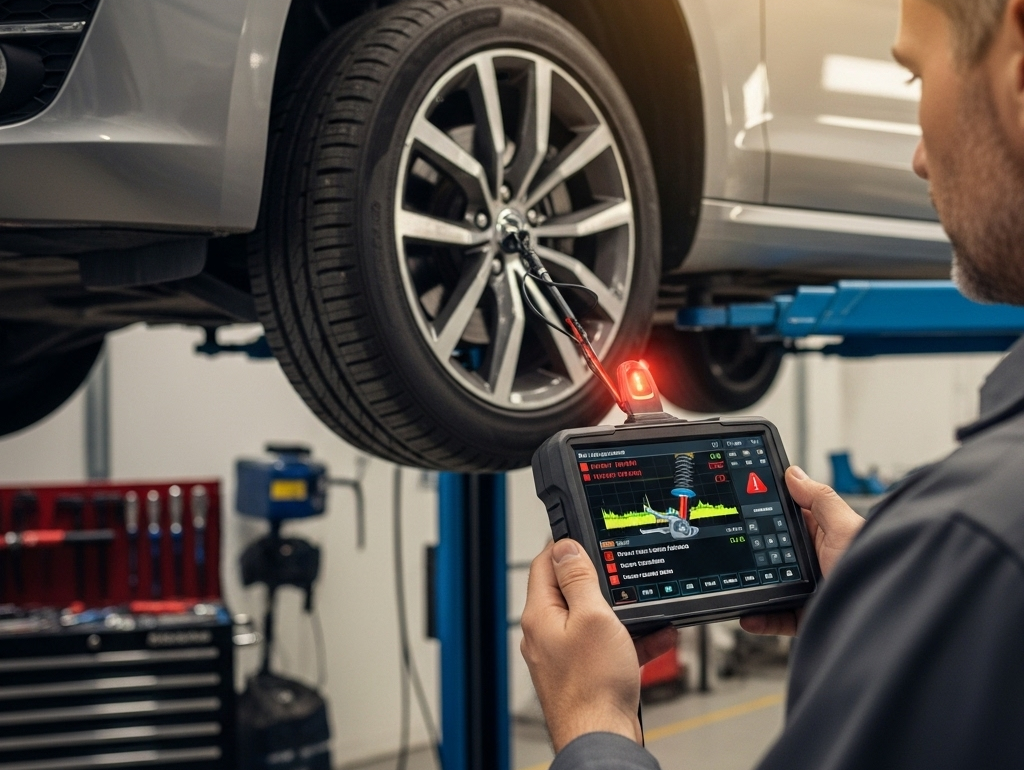
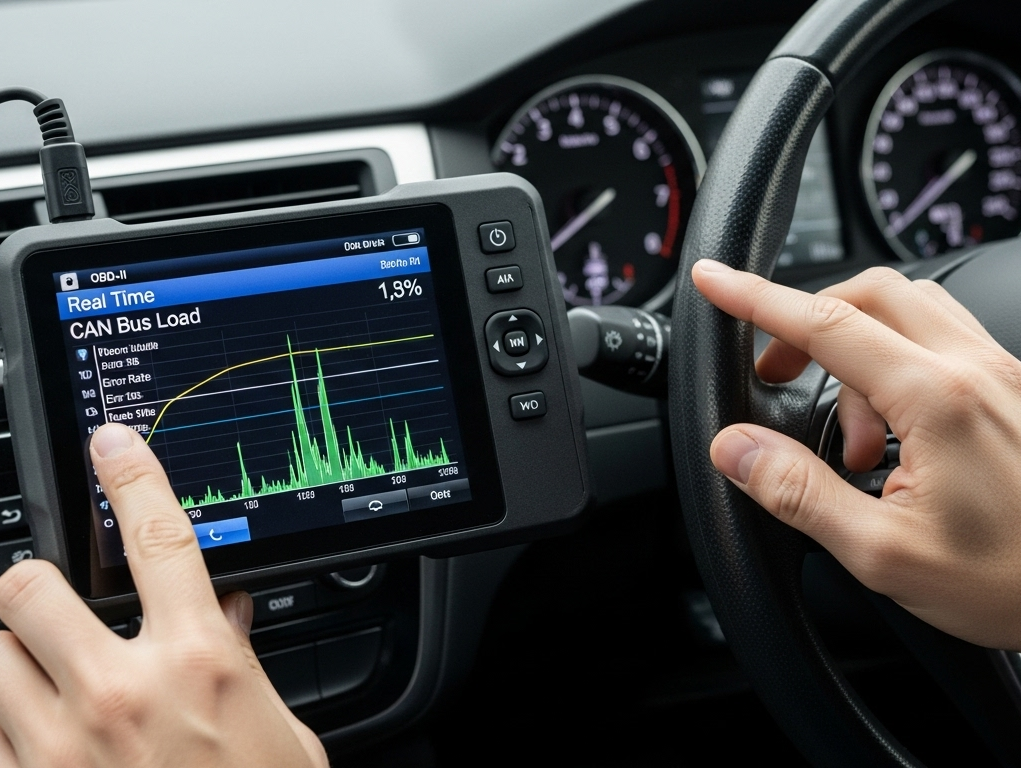
Whole towering refinement found in current motorcars asks for an intensive insight of diagnostic methods, especially about On-Board Diagnostics II (OBD2) and Tire Pressure Monitoring Modules (TPMS). Among Europe, Asia, and the US, these technologies work using separate frequencies. OBD2 specifications are largely aligned globally, essentially utilizing ISO 9141-50, KWP2000, CAN, and others, but regional implementations can pose minor variations. TPMS, however, is where remarkable frequency inconsistencies materialize. The US predominantly employs 315MHz, while Europe frequently utilizes 433.92MHz, and Asia manifests a more multifaceted range including both frequencies and complementary bands. So, valid diagnostic apparatus must be supplied with the capacity to comprehend these countless frequencies to enable effective troubleshooting and maintenance.
Interpreting TPMS Sensor Frequencies: A Global Guide (Europe, North America, Asia)
Grasping tire pressure tracking device (TPMS) transmitter bands across the world can be complex. Customarily, North districts largely utilize 315 MHz, nonetheless some fresh vehicles apply 433 MHz. On the other hand, Europe and most of Asia mainly work on the 433 MHz band, with some regional variations surfacing chiefly in distinct Asian regions. This is, crucial to ascertain the true wavelength ahead of purchasing TPMS readers to secure match and prevent prospective troubles.
Electric Vehicle Scanners: OBD2 Compatibility and TPMS Integration
State-of-the-art voltage-driven auto diagnostic tools are increasingly including crucial functionality, concerning centered on both customary On-Board Diagnostics II (OBD2) interface and Tire Pressure Monitoring System (TPMS) merging. Various EV transport units utilize OBD2 ports for fetching key system metrics, facilitating technicians and owners to discover emerging errors. Furthermore, unified TPMS unification provides exact tire pressure outputs, assisting to optimized security and propulsion conservation. This collaboration of OBD2 capabilities and TPMS deployment shows a serious improvement in voltage-driven car analysis.
Tire Monitoring Frequency Contrasts: European Region vs. This Region vs. Eastern Asia - A In-depth Review
Numerous sensors responsible for supervising tire pressure—TPMS—operate on unique radio signals, leading to significant regional divergences. US Region predominantly utilizes 315 MHz, though some newer vehicles are shifting to 433 MHz. Eurozone mandates 433.92 MHz, a fixed frequency to maintain coordination across jurisdictions. The East exhibits a multifaceted landscape, with specific zones using 315 MHz, others 433 MHz, and still some places employing a fusion of both. This dissimilarity brings challenges for service centers and motor vehicle users when dealing with replacement TPMS receivers or diagnostic technology, necessitating careful confirmation of regional standards to sidestep conflicts and establish proper serviceability of the TPMS.
Auto Scanners for Battery-Powered Autos: Tire Info Diagnostics & Frequency Interpretation
Today's auto devices are progressively developing to enable energy-based machines, principally with respect to TPMS diagnostics. Unlike internal combustion engine vehicles, electric cars present specific challenges when it comes to tire pressure system checks. Many electric autos use different TPMS frequencies requiring the detector to unerringly process the channel in use. This ability permits mechanics to principally read tyre data but also ascertain the clear channel being dispatched by the monitoring network detectors, assisting in accurate evaluation of malfunctions.
Europe TPMS Spectrum: What Require Get?
Confronting the world of automobile TPMS can be a headache, primarily due to the varying waves utilized across European Region, Asia, and the United States. European Union’s vehicles predominantly use 433.92 MHz, while multiple Asian countries employ 315 MHz and 433.92 MHz, creating a difficult situation for technicians. In the US, both 315 MHz and 433.92 MHz are popular, with 315 MHz being more substantial. Therefore, understanding these regional contrasts is imperative for accurately diagnosing TPMS concerns and selecting the suitable programming tools.
Developing those Fundamentals: Motor Vehicle Scanning, Mileage Battery Vehicles, combined with Tire Monitoring Transmitter Wave Observation
Concerning advanced motor vehicle technicians, purely understanding this basics pertaining to OBD2, voltage-powered machine networks, including pressure tracking module signal deciphering represents one significant subsequent degree. The former subjects dive inside routine techniques, comprising advanced devices as well as knowledge in order to appropriately spot or correct tough hurdles concerning tyre performance, current system efficiency, plus propulsion system snag readings. What's more, precisely diagnosing tire sensor systems sensor wavelengths – generally oscillate amid separate makes or trim levels – often indispensable to accurate adjustment.
Battery-Powered Vehicle Testing: Using OBD2 Scanners to Troubleshoot TPMS
Dealing with Tire Pressure Monitoring Systems tire info systems in electric vehicles zero-emission cars often includes more than plainly visual inspection. Modern OBD2 checkers offer remarkable ability to obtain TPMS data and recognize potential failures. Utilizing these instruments, technicians can view fault codes, examine sensor condition, and even initiate sensor tests, allowing for prompt diagnosis of TPMS malfunctions and minimizing downtime. The aforementioned is especially critical given the mounting complexity of EV networks.
Handling TPMS Wavelengths: A Effective Introduction for Eurozone, the East, and the US & Canada
Successfully running wheel pressure devices among the Continent, Asia, and US and Canada calls for a complete proficiency of the fluctuating broadcast ranges they employ. As opposed to a consistent system, each region habitually uses specific frequency ranges. To illustrate the EU principally utilizes 315 Megahertz and 433 million nine hundred twenty kHz, while North American Region commonly depends on 315 Megahertz despite some recent models are able to include tpms frequency europe asia north america 433 MHz frequency range. the East exhibits a more fragmented context, with several spectral regions being employed, contingent upon the territorial division and auto maker.
- Regard regional laws regarding radio wave.
- Seek out your driver's guide for explicit signal.
- Utilize a monitoring device built for decoding numerous bands.